There’s something very special about spotting a tiny ringed plover darting across the sand.
Small, quick, and wonderfully well-camouflaged, these charming little birds are the real-life inspiration behind Bramble and the Beach Nest. Gentle creatures perfectly adapted to life along the British coastline.
If you’ve ever wandered along a quiet beach and noticed a small bird racing along the shoreline before suddenly freezing still, there’s a good chance you’ve already met a ringed plover without even realising it.
What Does a Ringed Plover Look Like?
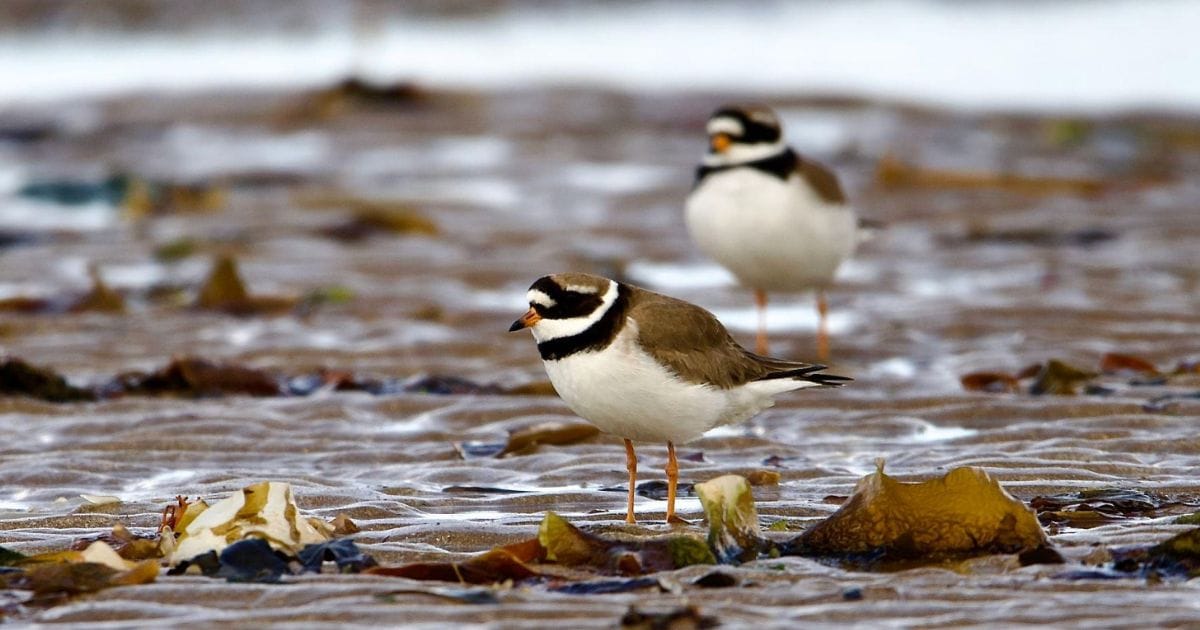
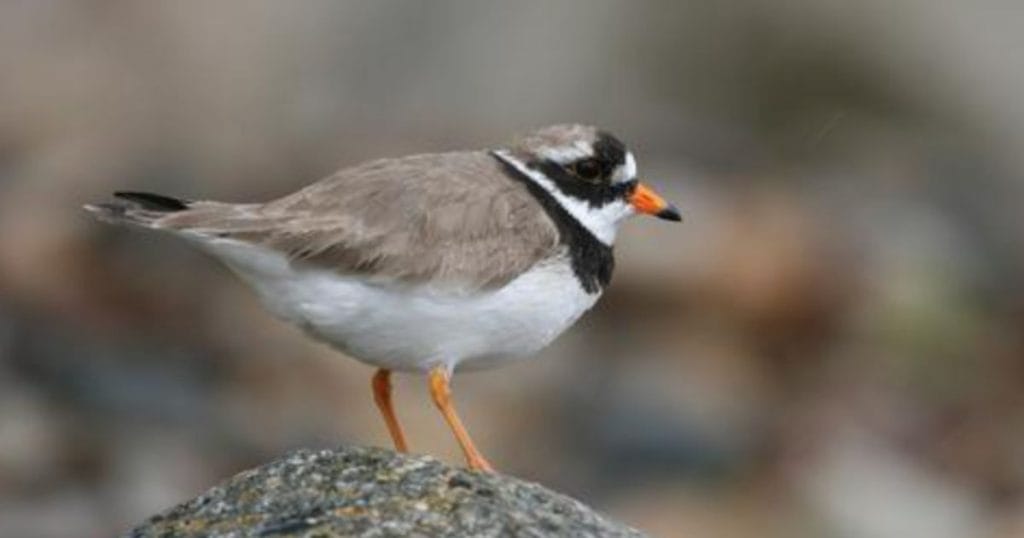
Ringed plovers are small wading birds, only slightly larger than a sparrow. They have soft sandy-brown backs, bright white undersides, and a distinctive black band around their neck, almost like a tiny collar. Their short orange-and-black beaks and bright orange legs make them especially striking when seen up close.
Their chicks are even more remarkable.
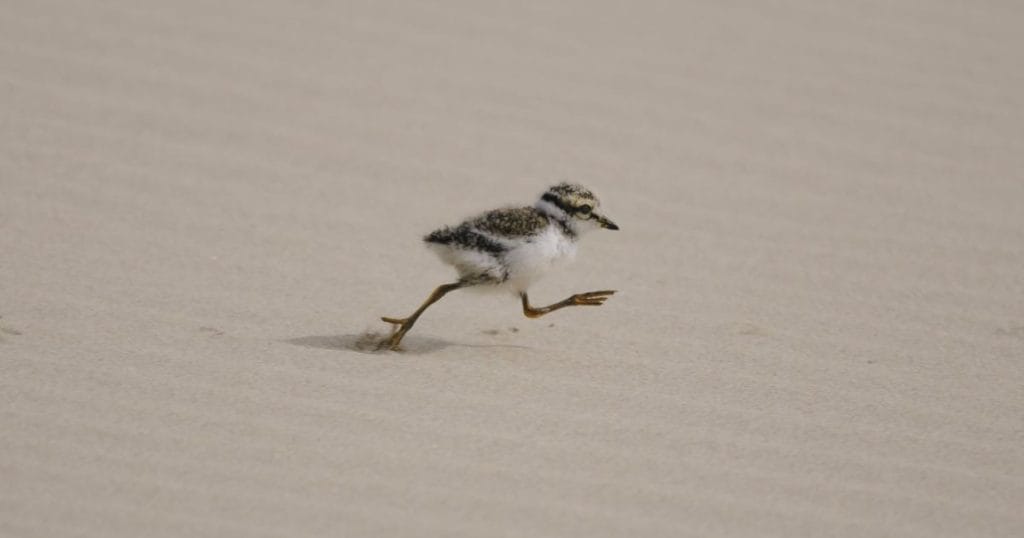
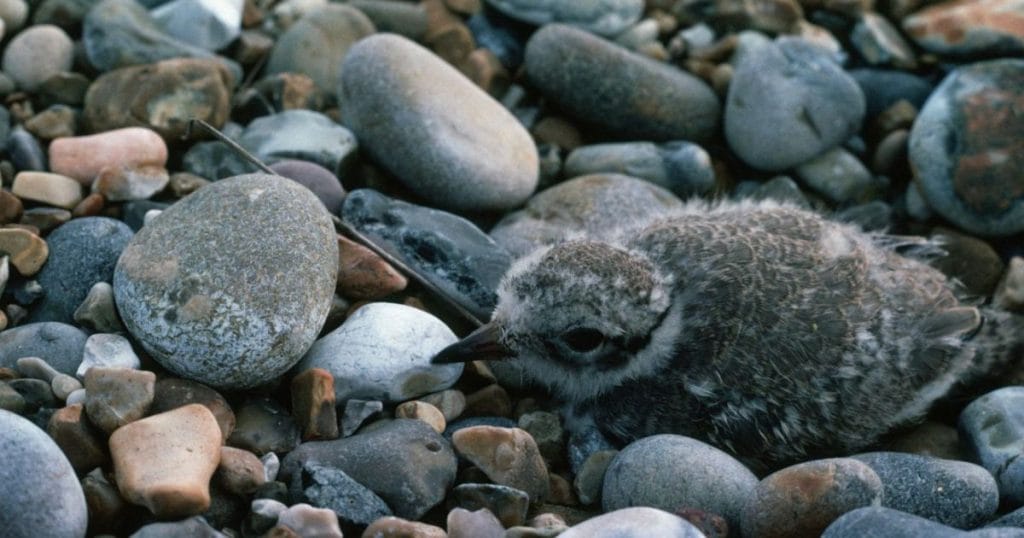
Covered in speckled sandy down, young ringed plovers blend almost perfectly into the beach around them. This camouflage helps protect them from predators, but it also means they can be incredibly difficult for people to spot.
Instead of staying hidden in a nest for long, chicks leave the nest very quickly after hatching and begin exploring the beach with their parents nearby.
Where Do Ringed Plovers Live?
Ringed plovers live along coastlines across the UK, especially on sandy and shingle beaches, saltmarshes, dunes, and estuaries.
They prefer open coastal spaces where they can easily spot danger and search for food along the tide line. During spring and summer, many ringed plovers return to British beaches to breed and raise their chicks.
Because they nest directly on the ground, they need quiet areas where their eggs and chicks are less likely to be disturbed.
Some of the best places to spot ringed plovers in the UK include:
- Coastal nature reserves
- Sand dune systems
- Quiet sandy beaches
- Estuaries and mudflats
- Protected wildlife beaches
Here on the Isle of Wight, ringed plovers can occasionally be seen along quieter stretches of coastline, especially outside of busy tourist areas.
What Do They Eat?
Ringed plovers spend much of their time scurrying back and forth along the shoreline searching for tiny creatures hidden in the sand.
Their diet includes:
- Small insects
- Tiny crustaceans
- Marine worms
- Beetles
- Larvae and other invertebrates
You’ll often see them pause suddenly, peck quickly at the sand, then dash off again in another direction.
A Clever Way to Protect Their Chicks
One of the most fascinating things about ringed plovers is the way they protect their nests.
Because their eggs are laid directly on open sand or shingle, adult birds rely heavily on camouflage and distraction techniques. If a predator gets too close, a parent may pretend to have an injured wing, fluttering away from the nest to lure danger elsewhere.
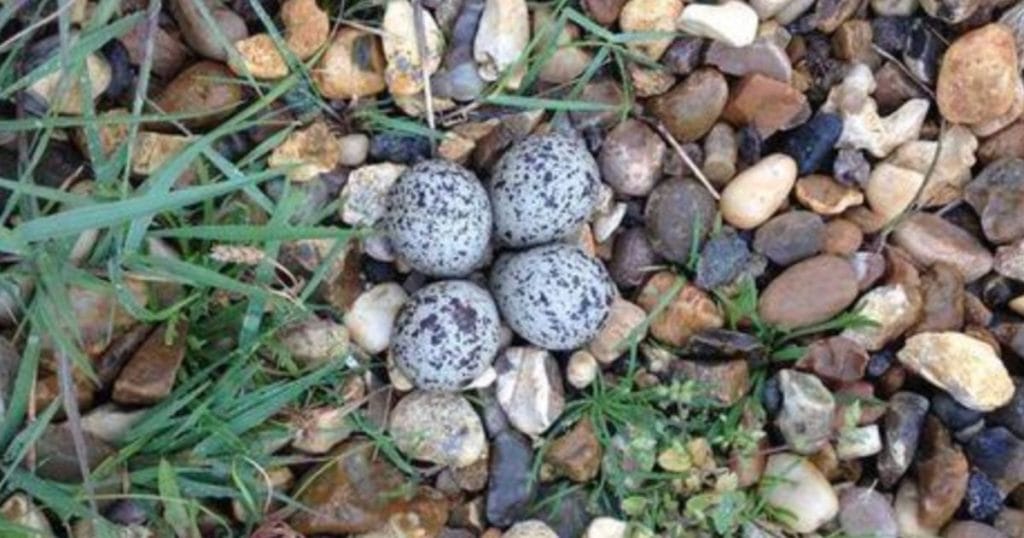
The nest itself is incredibly simple, usually just a shallow scrape in the sand lined with tiny stones or shells.
Their eggs are beautifully speckled and almost perfectly match the beach around them.
Why Ringed Plovers Need Our Help
Ringed plovers face many challenges, especially during nesting season.
Because they nest on open beaches, eggs and chicks can easily be disturbed accidentally by people, dogs, vehicles, or beach activities. Even well-meaning visitors may not realise nests are nearby because they are so difficult to see.
Habitat loss, coastal development, and increasing disturbance have affected breeding populations in some areas.
Simple actions can make a huge difference:
Giving wildlife space during breeding season
Keeping dogs under control near nesting areas
Watching where we step on quiet beaches
Respecting fenced-off wildlife zones
Taking litter home
How to Spot a Ringed Plover
If you’d like to look for ringed plovers yourself, early morning or quieter evenings are often the best times.
Binoculars can help you observe them from a respectful distance without disturbing them.
And if you do spot one, pause for a moment and watch carefully. Despite their tiny size, these little birds are full of character – curious, determined, and perfectly at home beside the sea.
Just like Bramble.