But swallows bring more than beauty and symbolism. On UK farms, they play a quiet and valuable ecological role.
A Long Journey Home
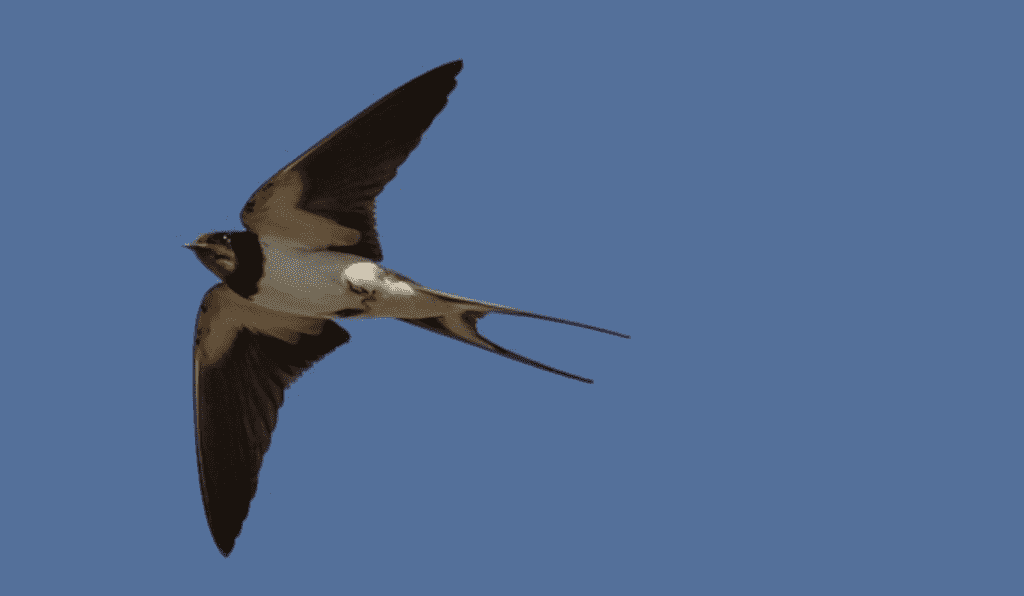
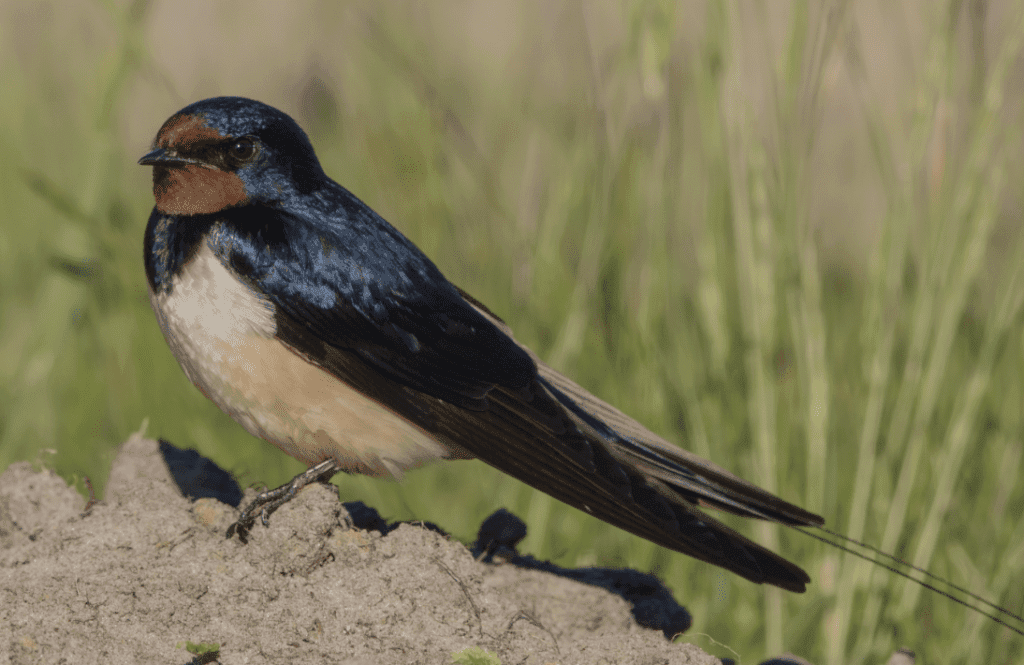
Barn swallows spend the winter in sub-Saharan Africa before migrating thousands of miles back to the UK each spring. Many return to the same farm buildings year after year, nesting in open barns, stables and under eaves.
Their arrival usually coincides with rising insect numbers, perfect timing for birds that feed almost entirely on flying insects. This synchrony is no accident. Over thousands of years, swallows have evolved to follow the seasonal pulse of insect abundance across continents.
When they arrive in April and May, farmland skies are beginning to hum again.
Natural Insect Control in Action
Swallows are aerial insectivores. They catch prey on the wing. Their diet includes house flies, blowflies, midges, flying beetles, aphids and other small airborne insects.
On livestock farms, this can be particularly beneficial. Flies around cattle and horses are not just irritating, they can affect animal welfare and productivity. By feeding continuously throughout the day, swallows help reduce the density of these flying insects in and around farm buildings.
They are not a targeted pest control system and they eat what is available. Collectively, however, a nesting colony can remove thousands of insects over the course of a breeding season.
It is a reminder that biodiversity often provides services we barely notice.
Why Farms Suit Swallows
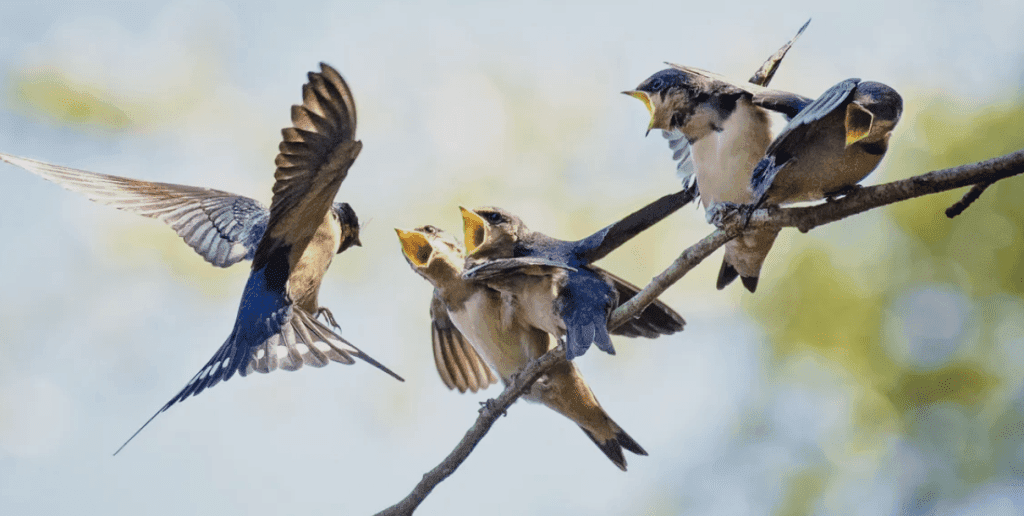
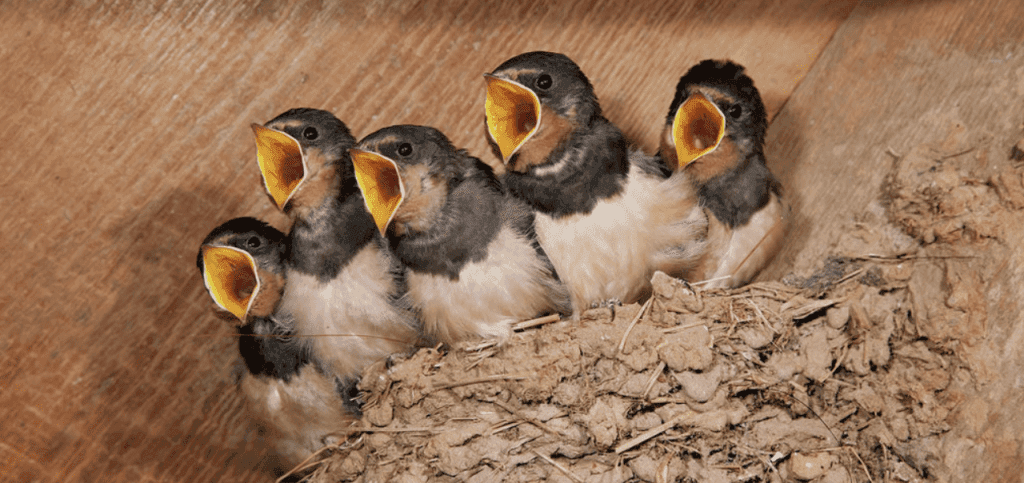
Traditional mixed farms offer everything swallows need. Open barns provide nesting spaces. Mud allows them to build their cup shaped nests. Livestock supports fly populations. Hedgerows and field margins provide insect rich feeding grounds.
Where farms maintain hedgerows, wildflower strips and lower pesticide use, insect numbers tend to be healthier, which in turn supports swallows and other insect eating birds.
It is all interconnected.
A Species Tied to Agricultural Change
Although still familiar, barn swallows have experienced declines in parts of the UK. Changes in farming practices, sealed modern buildings, loss of nesting access and reduced insect abundance all affect them.
Encouraging swallows on farms can be as simple as leaving barn doors open during spring and summer, allowing nesting access where safe and practical, installing swallow nesting cups in suitable buildings and supporting insect rich habitats around fields.
Welcoming swallows is not just about nostalgia. It is about strengthening natural systems that benefit farming too.
More Than Pest Control
Swallows are cultural markers of hope and renewal. Their arrival has long been associated with spring, new beginnings and the turning of the year.
Behind that symbolism lies something deeply practical.
A migratory bird that travels thousands of miles to breed on UK farms, and in doing so helps keep the skies above fields just a little clearer of flies.
Nature rarely works in isolation. The swallow’s journey from Africa to Britain is not only extraordinary. It is part of a functioning ecological partnership between land, insects, livestock and birds.
And every April, it begins again.