Jackdaws are one of my favourite birds to watch.
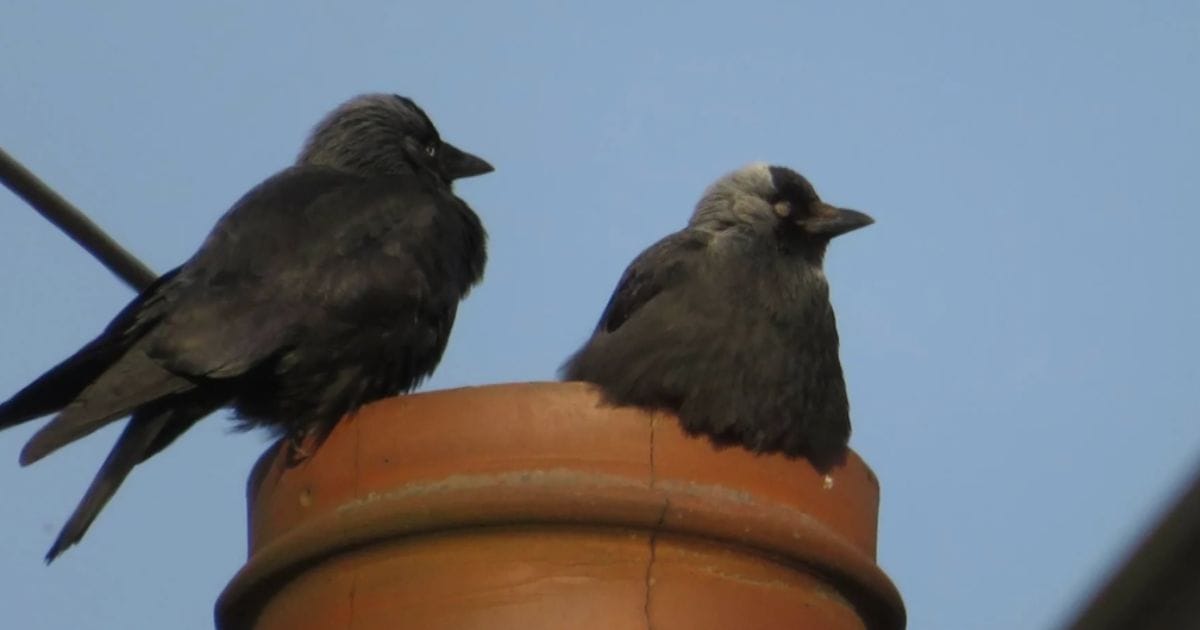
There is something about them that feels full of character. Alert. Observant. Slightly mischievous. Every spring, the chimney opposite our house becomes occupied.
Not by smoke.
But by jackdaws.
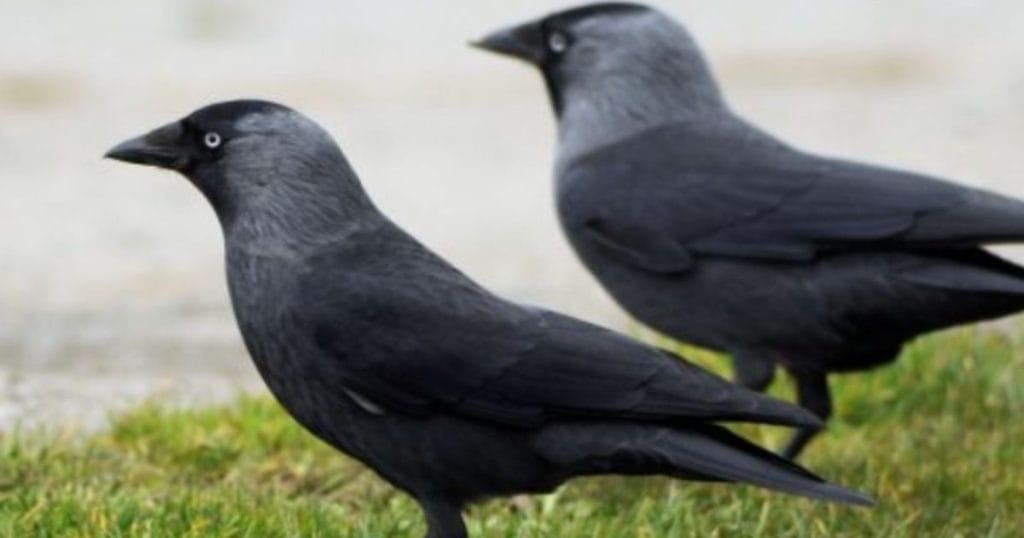
The Eurasian Jackdaw is one of the smallest members of the crow family in the UK, though you would never guess it from their confidence. Glossy black with a soft silver-grey nape and striking pale eyes, they carry themselves with purpose.
And once you start watching them, it is hard to stop.
A Pair That Returns
Jackdaws form strong pair bonds and often mate for life. When a pair chooses a chimney, they will usually return to it year after year.
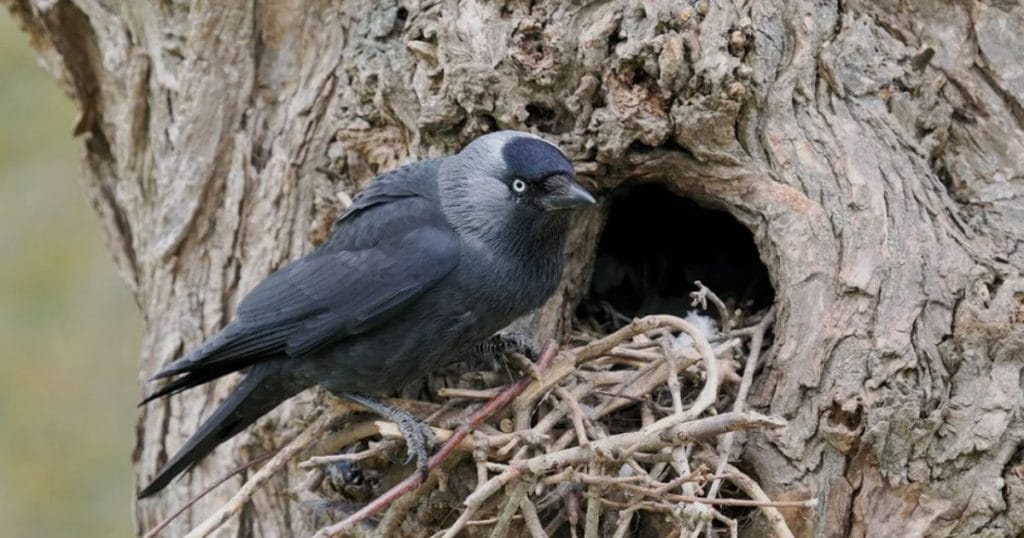
In early spring, there is a steady rhythm to their days. One bird keeps watch while the other disappears down into the chimney pot. Twigs arrive one by one. Sometimes they are dropped. Sometimes they wedge awkwardly against the rim. It can look untidy from the outside, but inside a deep platform is forming.
Both male and female help build. Both will later feed the chicks.
There is something reassuring in that quiet partnership.
A Noisier Morning
As the weeks pass, the chimney begins to sound different.
Jackdaws typically lay four to six eggs. When the chicks hatch, the activity above the rooftops increases. Adults arrive and leave in quick succession, carrying insects and other food back to the nest. Their calls become sharper, more frequent.
Then one morning, a small grey head appears at the rim.
Fledglings often perch at the chimney edge before they are ready to fly, testing their balance, looking out at the world they are about to join. For a few days, the chimney feels alive with movement and sound.
Even after they take their first flight, young jackdaws do not simply vanish. They often remain with the wider flock, learning from older birds and strengthening social bonds that will shape their future lives.
A Life Lived Together
Jackdaws are deeply social birds. Rarely do you see just one for long. Beyond the nesting pair, there is always a sense of a larger community.
They use specific contact calls to keep track of one another. Mated pairs recognise each other’s voices. In autumn and winter, jackdaws gather into large communal roosts, sometimes hundreds or even thousands of birds settling together at dusk.
That evening movement, dark shapes crossing the sky in loose formation, is not random. It is community in action.
Watching them from the window, you begin to notice patterns. The lookout bird. The returning partner. The fledgling calling insistently. The small group gathering on the television aerial before flying off together.
They are not just birds on a chimney stack. They are a family within a wider social world.
Living Alongside Them
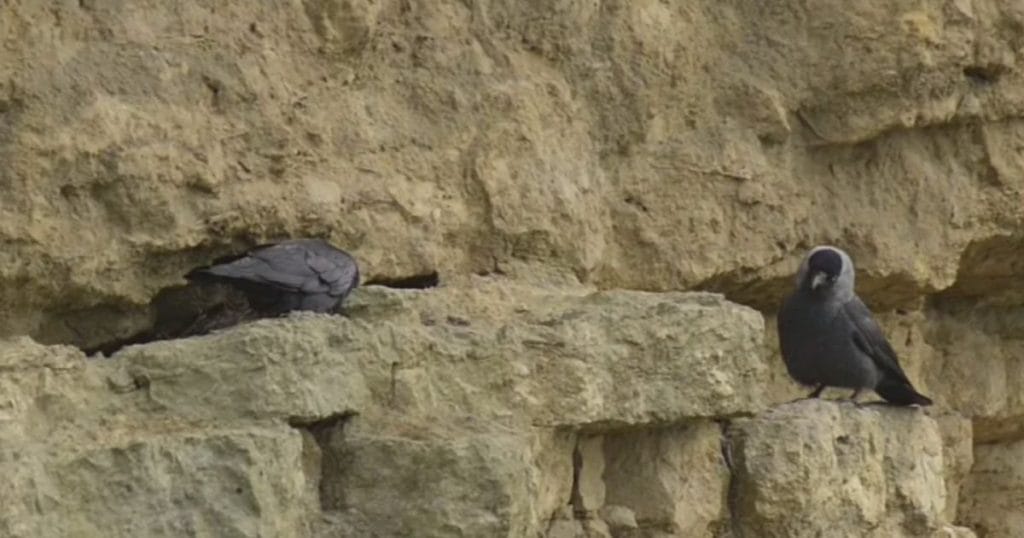
Jackdaws have adapted remarkably well to our towns and villages. Chimneys echo the cliff faces and hollow spaces they would once have used. Rooftops replace rocky ledges.
When a pair chooses a nearby chimney, it feels like being allowed a glimpse into something ancient and enduring. A partnership. A nursery. A small community unfolding above everyday life.
It is ordinary.
And quietly extraordinary at the same time.