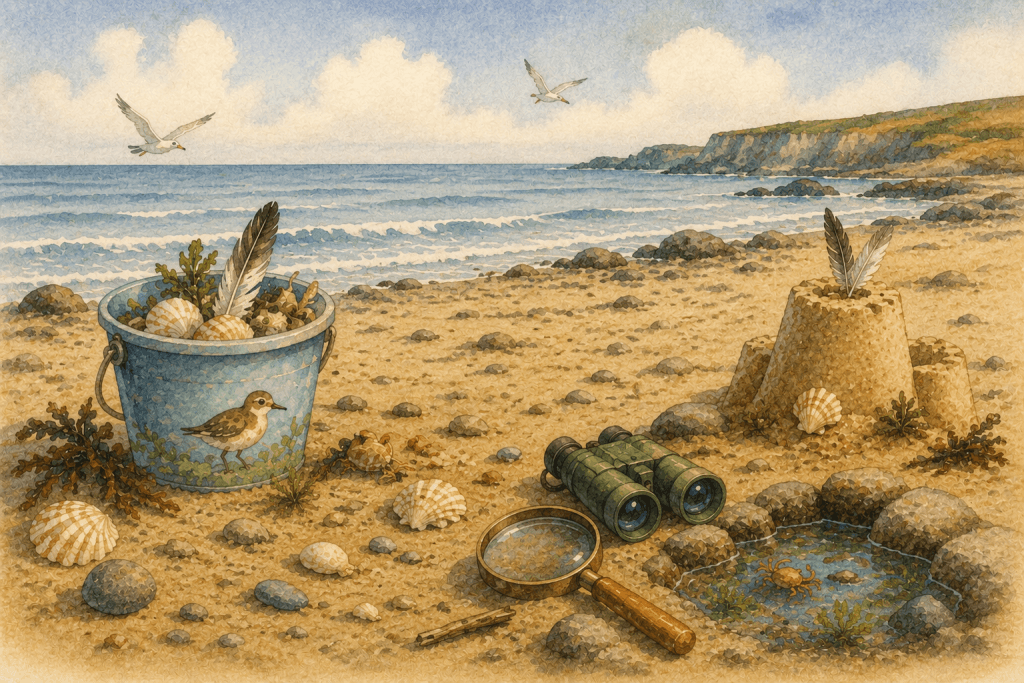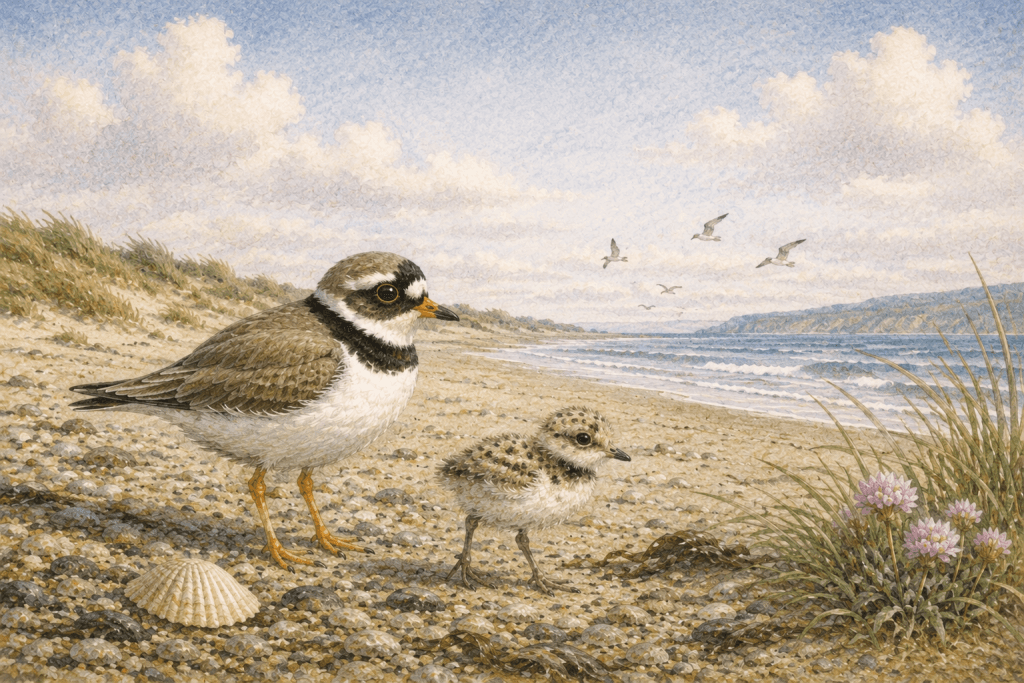
Some of the best parts of creating nature-led stories happen long before I sit down to write.
They begin with walking.
Slowly.
Looking up.
Listening.
Living on the Isle of Wight means I am incredibly lucky. Within a short distance there are rolling downs, beautiful beaches, woodland edges, open farmland and quiet historic places where nature and history sit side by side. And above them all, if you are patient, there are birds of prey.
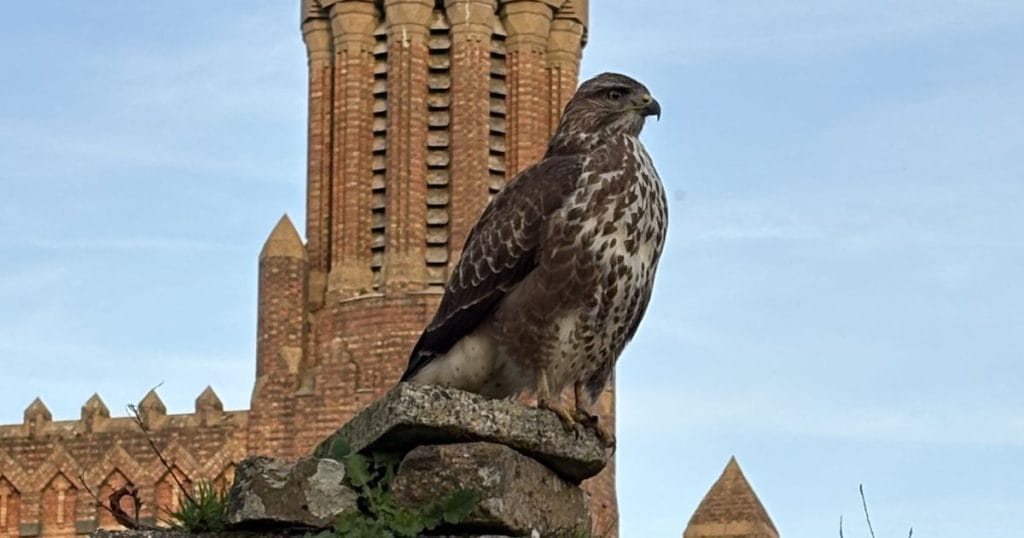
Recently, I was out walking at Quarr Abbey when I spotted a shape perched on a stone pillar along the grounds. Broad shouldered. Completely still. Watching.
A buzzard.
The Common Buzzard is now one of the most widespread birds of prey in Britain, but seeing one up close never feels ordinary. Their feather patterns vary beautifully from bird to bird, pale mottling across dark brown wings, a strong hooked beak, steady amber eyes scanning the land below.
The abbey buildings stood quietly behind it. The stone warm in the light. The only movement was the slight turn of the buzzard’s head as it surveyed the surrounding fields and woodland.
It felt ancient somehow. Wildness perched against centuries old stone.
Moments like that stay with me.
The Patience of Watching
Birds of prey are not always easy to spot. Often you hear them before you see them. The familiar mewing call of a buzzard circling high overhead. A shadow gliding across grass.
Sometimes you wait.
Sometimes you scan treelines.
Sometimes you go home having seen nothing at all.
And that is part of it too.
The act of looking changes how you move through a landscape. You notice thermals rising over fields. You notice rabbits keeping low. You notice the sudden hush when smaller birds sense a predator nearby.
It sharpens observation, which always finds its way back into my work.
Conservation Success in the Skies
The Isle of Wight has quietly become a remarkable place for birds of prey.
In recent years, white tailed eagles have been reintroduced to the south coast through a programme led by the Roy Dennis Wildlife Foundation. These magnificent birds, once lost from England, now soar again over the Solent.
The White-tailed Eagle is one of the largest birds of prey in the UK, with an enormous wingspan and distinctive pale head in adults. Seeing one pass overhead is something you never forget.
Red kites are another conservation success story. After being driven to the brink of extinction in Britain, careful protection and reintroduction programmes have allowed populations to recover. The Red Kite is now once again a familiar sight in parts of the country, tilting effortlessly in the wind with its forked tail.
To walk beneath skies that hold these birds feels like quiet evidence that conservation can work.

Why It Matters
Watching birds of prey reminds me that landscapes can recover. That absence does not have to be permanent.
Birds of prey sit at the top of their food chains. As apex predators, they play an essential role in keeping ecosystems balanced. By regulating populations of small mammals and other prey, they help prevent imbalances that can ripple through habitats. When raptors are present and thriving, it is often a sign that the wider environment beneath them is functioning well.
They need healthy prey populations.
They need intact habitats.
They need space.
A sky that holds buzzards, red kites and even white tailed eagles is usually a sky above a living, breathing system that is working as it should.
That buzzard on the stone pillar at Quarr Abbey was not dramatic or showy. It was simply being what it is. Self contained. Wild. Perfectly at ease in its place.
But its presence meant something larger.
Behind every story I write, there are walks like that. Moments of stillness. Glimpses of something untamed against an old stone backdrop.
It is not always spectacular.
But it is always grounding.