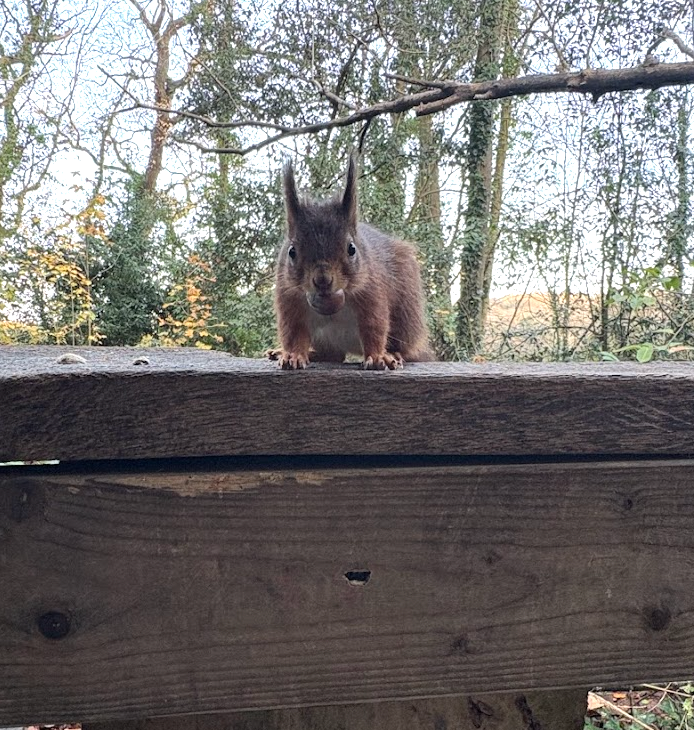
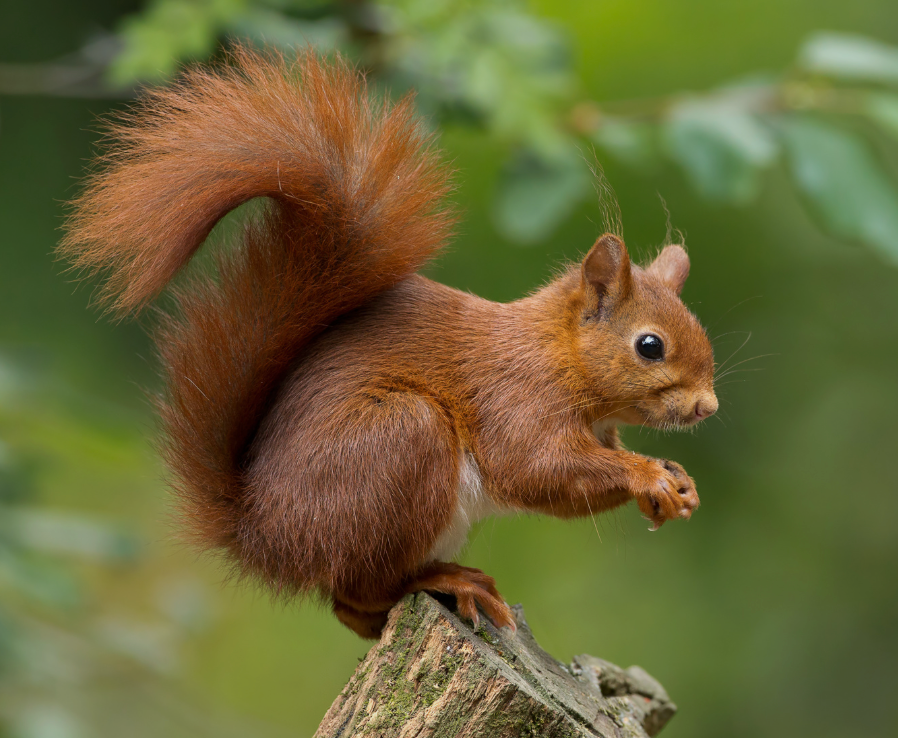
Often spotted darting up tree trunks or pausing briefly with a pine cone in their paws, red squirrels are perfectly adapted to life among the trees. From their sharp claws and strong hind legs to their impressive memory, everything about them is designed for a woodland life.
Woodland Gardeners Without Knowing It
One of the most fascinating things about red squirrels is the way they store food. During autumn, they bury and hide seeds, nuts, and cones across the woodland floor to eat later when food is scarce.
They don’t remember where every single cache is, though. In fact, they forget quite a lot of them. Those forgotten seeds are often left to germinate, quietly growing into new trees over time.
Without meaning to, red squirrels help shape the future of our forests. They’re tiny woodland gardeners, planting trees simply by preparing for winter.
Built for the Trees
Red squirrels spend most of their lives in the canopy. Their strong back legs help them leap between branches, while their long tails act as balance poles and blankets, keeping them steady and warm.
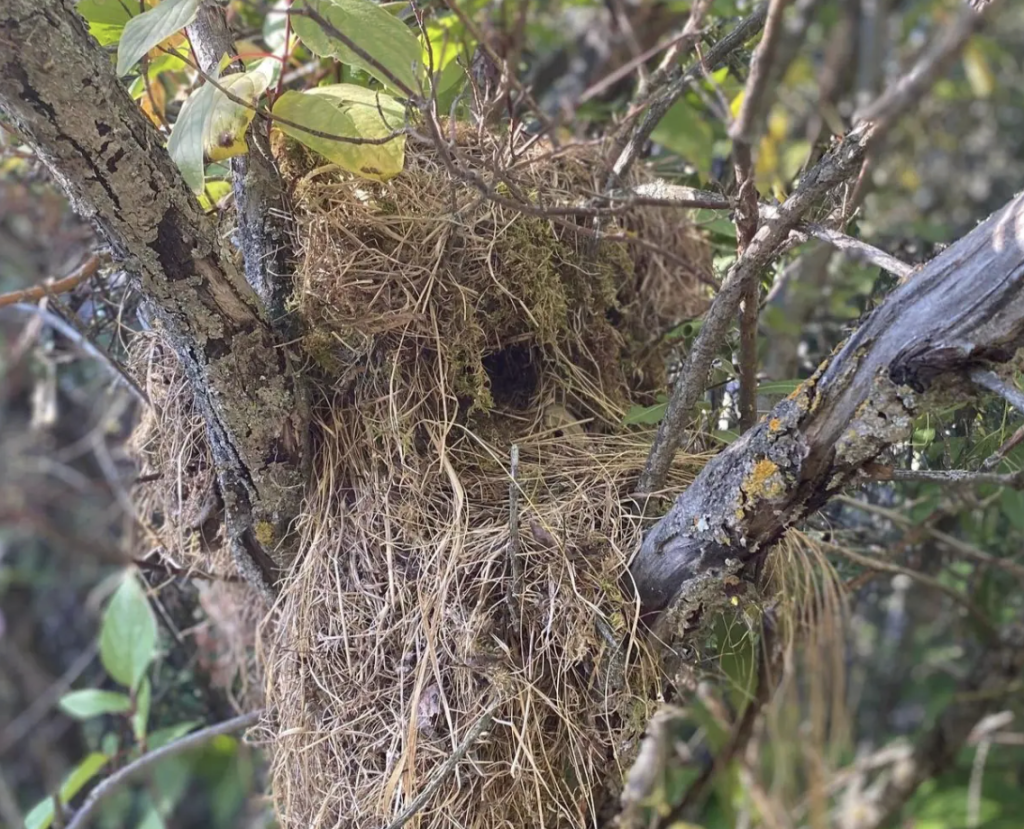
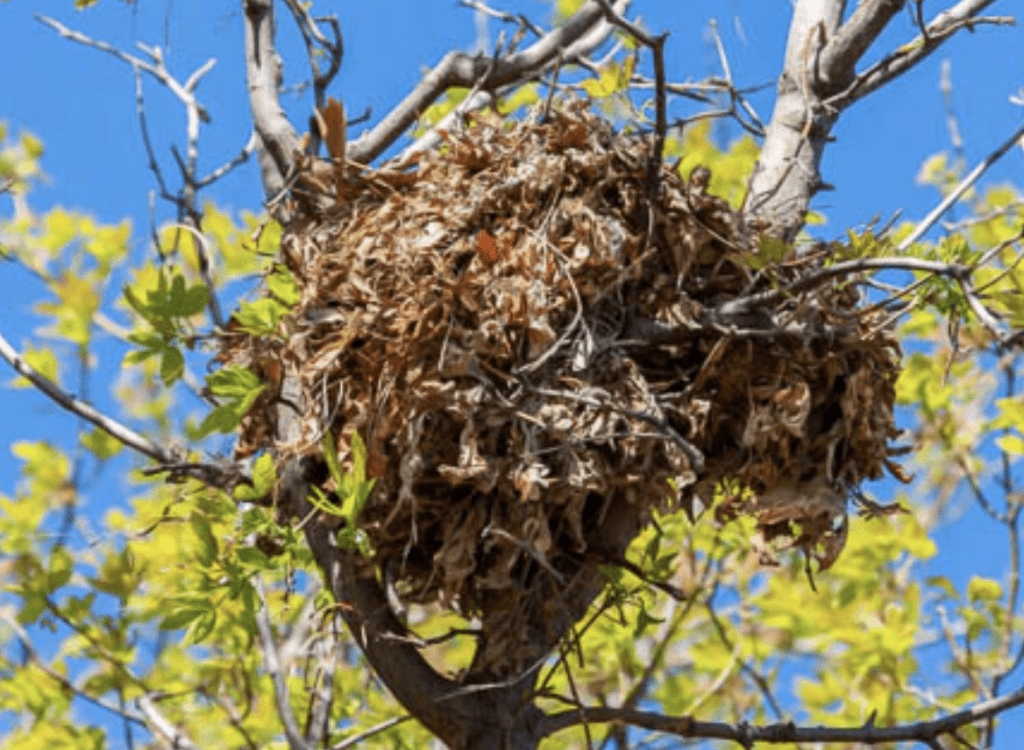
They live in nests called dreys, usually built high in trees from twigs, moss, and leaves. Dreys are carefully tucked into branches, offering shelter from wind, rain, and predators.
A Changing Story
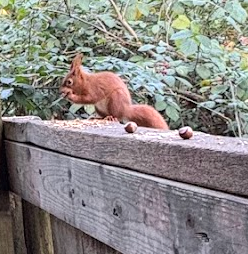
Red squirrels were once widespread across the UK, but their numbers have declined significantly over the last century. Habitat loss and competition from grey squirrels have made life increasingly difficult for them.
In places where red squirrels still thrive, protected woodlands and careful conservation play a vital role. Spotting one in the wild is often a sign that the woodland is healthy and well cared for.
Why They Matter
Red squirrels aren’t just charming to watch. They’re part of a much bigger picture. They help forests regenerate, support woodland ecosystems, and remind us how interconnected nature really is.
When we protect habitats, we don’t just protect one species. We protect the countless quiet processes happening beneath the trees, many of which go unnoticed.
A Small Invitation
Next time you’re walking through woodland, look up. Watch the branches. Listen for the rustle of movement above your head.
You might just spot a flash of russet fur, and if you do, you’ll be seeing one of the woodland’s most important little workers in action.